

Verborrea / Rambling
Crónica de un reencuentro / Chronicle of a Reunion.

(Scroll for English)
Érase una vez un reencuentro de mi familia hispanovenezolana, un primero de enero de 2026, en Tenerife. Los integrantes de la familia viven desperdigados por todas partes del mundo. Ninguno vive en Venezuela. Viajaron desde Santo Domingo, Zúrich, Bali, Valencia, Barcelona, Connecticut. El primo que puede asistir solo por videollamada permanece en Costa Rica.
La principal motivadora de la reunión es la abuela, de 98 años, originaria de La Palma, Islas Canarias, quien en su juventud migró a Venezuela para, cincuenta años después, retornar a su país. Algunos de los integrantes de la familia han tenido ocasión de verse en los últimos años, otros hace mucho que no coinciden. Entre los del último grupo se encuentra la tía A., quien, a pesar de no ser tía de sangre, es querida por todos como una más.
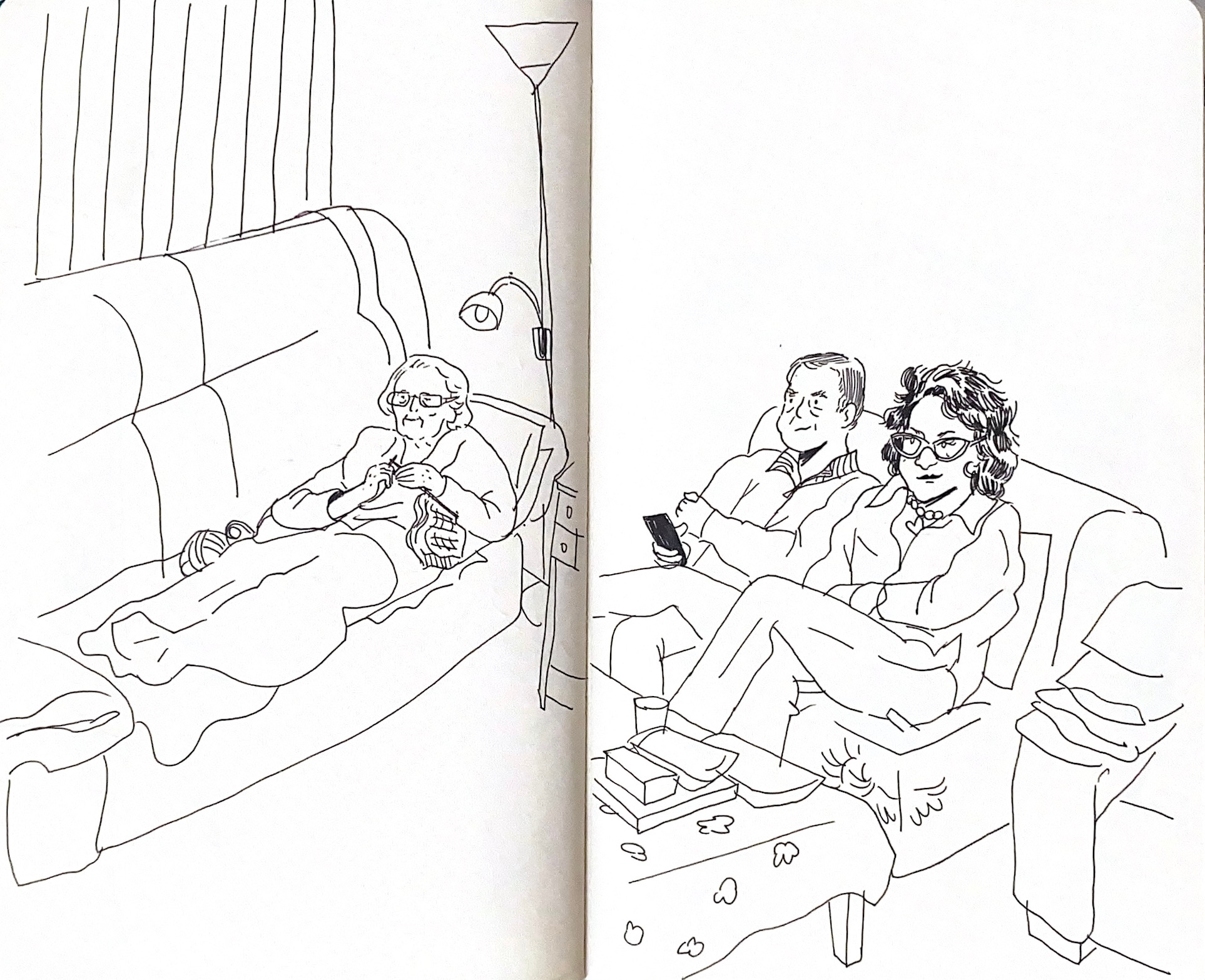
Tía A. habla mucho. El apartamento de la abuela, abarrotado ya días antes de su llegada, ahora está rebasado de todas las historias que A. no pudo compartir con la familia durante años de ausencia. Hay mucho que contar, anécdotas que recordar, razones por las que llorar.
Entre sus primeras palabras, sollozando, dice:
—Dios mío, no podemos dejar que pase tanto el tiempo, ¡se nos va la vida!
Yo tomo nota de esta frase y pienso en cómo mi vida ha sido tan distinta a la de mis padres y mis tíos, quienes, a mi edad, habían permanecido en una misma ciudad. Mientras ellos pertenecían a una ciudad, a un país y una cultura relativamente homogéneos, yo pertenezco a todos los lugares en los que viví, a los ires y venires, a las despedidas y los reencuentros.
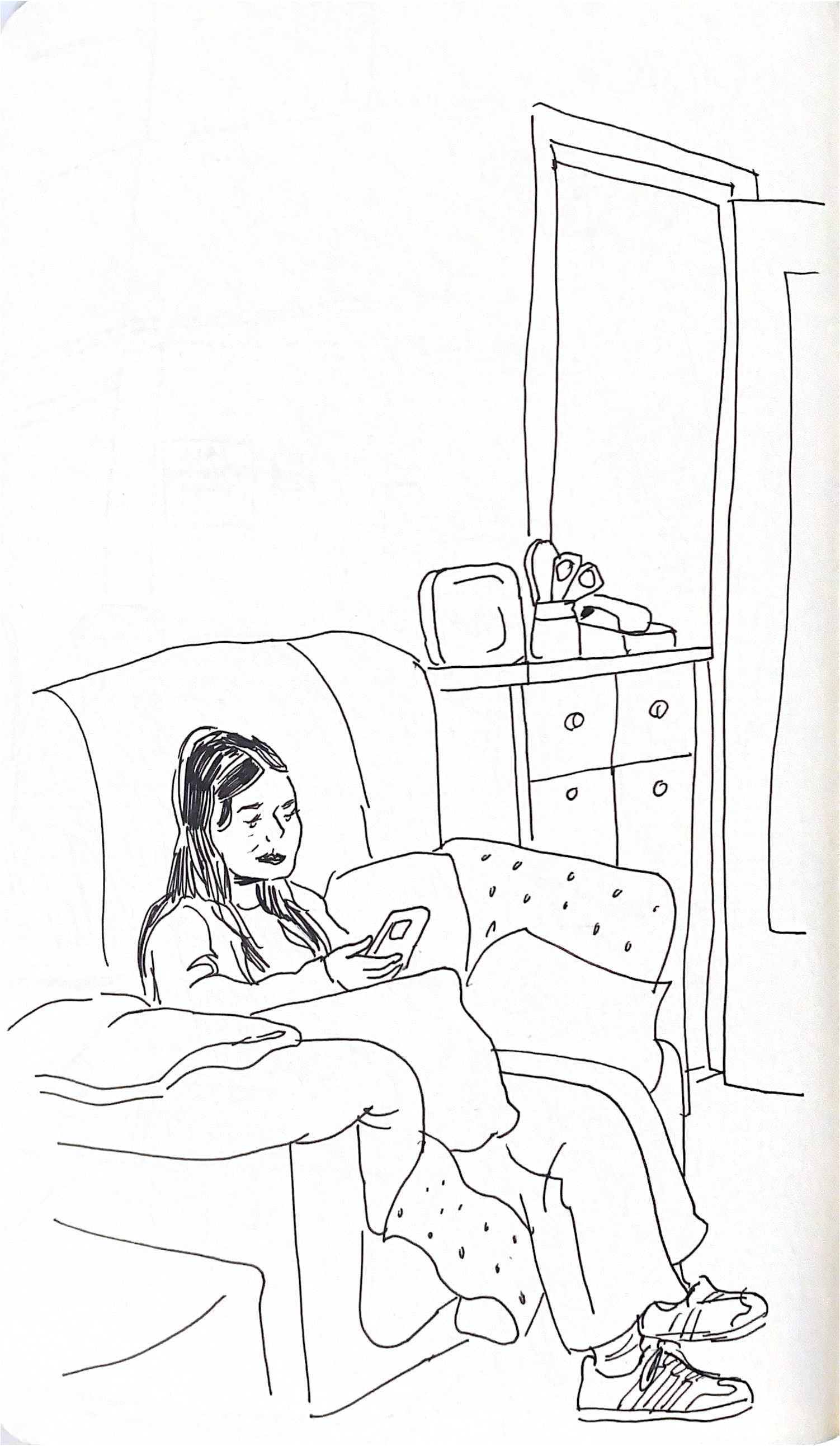
Tía A. habla tanto que todos se preocupan. Mamá asegura que antes no era así. Yo no puedo recordarlo porque fue hace muchos años que compartir con A. dejó de ser parte de mi rutina. La misma A. afirma que, de joven, solía ser tímida, cosa que a todos nos cuesta creer. Las palabras emanan de ella sin filtro. Nos aturde con divertidos (y pesados) juicios sobre los adultos en que sus sobrinos nos hemos convertido.
Tras un par de días de incesante palabrería, Mamá declara que algo debe de estar mal, y tras varias hipótesis y una rápida búsqueda en ChatGPT sobre sus efectos secundarios, se decide unánimemente que, en efecto, la verborrea no es normal, y ha deberse a la medicación que A. está tomando.
El tres de enero me despiertan los gritos de mi tía:
-¡Se llevaron a Maduro! ¡Los gringos se lo llevaron! ¡No lo puedo creer! Dios mío, ¡mira esa vaina! ¡Atacaron Caracas!
Yo no entiendo nada de lo que está pasando. Desde el cuarto que comparto con mi hermana casi no discierno sus palabras, pero intuyo que se trata de algo grave. Lo primero que hago es ver el teléfono, allí donde me entero de casi todo lo que pasa en Venezuela, y veo unas imágenes que, aunque había llegado a imaginar, dudaba profundamente llegaría a ver jamás.
Salgo corriendo del cuarto y me topo con la mitad de mi familia frente al televisor, viendo las mismas imágenes que yo sostengo en mis manos. Aviones bombardeando Caracas. No puedo evitar llorar de pánico y miedo. Pienso en mi amiga de la infancia que vive aún allá. Pienso en mi tía y en mi primo y su familia, y siento alivio al recordar que andan de viaje.
Pronto el pánico muta en una verborrea de preguntas que emanan de todos los allí reunidos: ¿Puede ser verdad?, ¿habrá muerto mucha gente?, ¿significa esto el fin del régimen?, ¿seguirán bombardeando?, ¿se lo llevaron?, ¿de verdad se lo llevaron?, ¿celebramos?, ¿abrimos un champán?, ¿salimos a la calle a pegar gritos?
¿Podremos volver a Venezuela? ¿Volver, y no solo de vacaciones?
La verborrea de mi tía pronto se me contagia y se traduce en verborrea digital. Comienzo a compartir stories como si la libertad de mi país dependiera de ello. Comienzo a explicar, una y otra vez, lo que para nosotros parece obvio y el mundo parece incapaz de comprender: que, a pesar de la incertidumbre, a pesar del peligro que todo esto implica, a pesar de las infinitas contradicciones, a pesar de aborrecer al supuesto liberador, a pesar del terror, a pesar de no estar de acuerdo con una intervención… el que haya ocurrido nos llena de una nebulosa esperanza; pero esperanza, al fin y al cabo. Una esperanza inconcebible apenas un día antes.
Estos días, esa misma esperanza vacila entre gran desilusión, mucho miedo, y una fe ciega en que el tiempo nos dará la razón, en que una transición (si es que de verdad la hay) lenta es mejor, en que la historia dará a nuestro país, por fin, un aliento.
La abuela, desde el sofá del que apenas se ha movido desde que retornó a España hace unos veinte años, observa cautelosa. Cuando al día siguiente vemos las imágenes del tirano capturado, le pregunto:
—Abuela, ¿tú te imaginaste que en tu vida verías esto?
—No—responde—Yo lo que creo es que están celebrando demasiado; antes de tiempo.
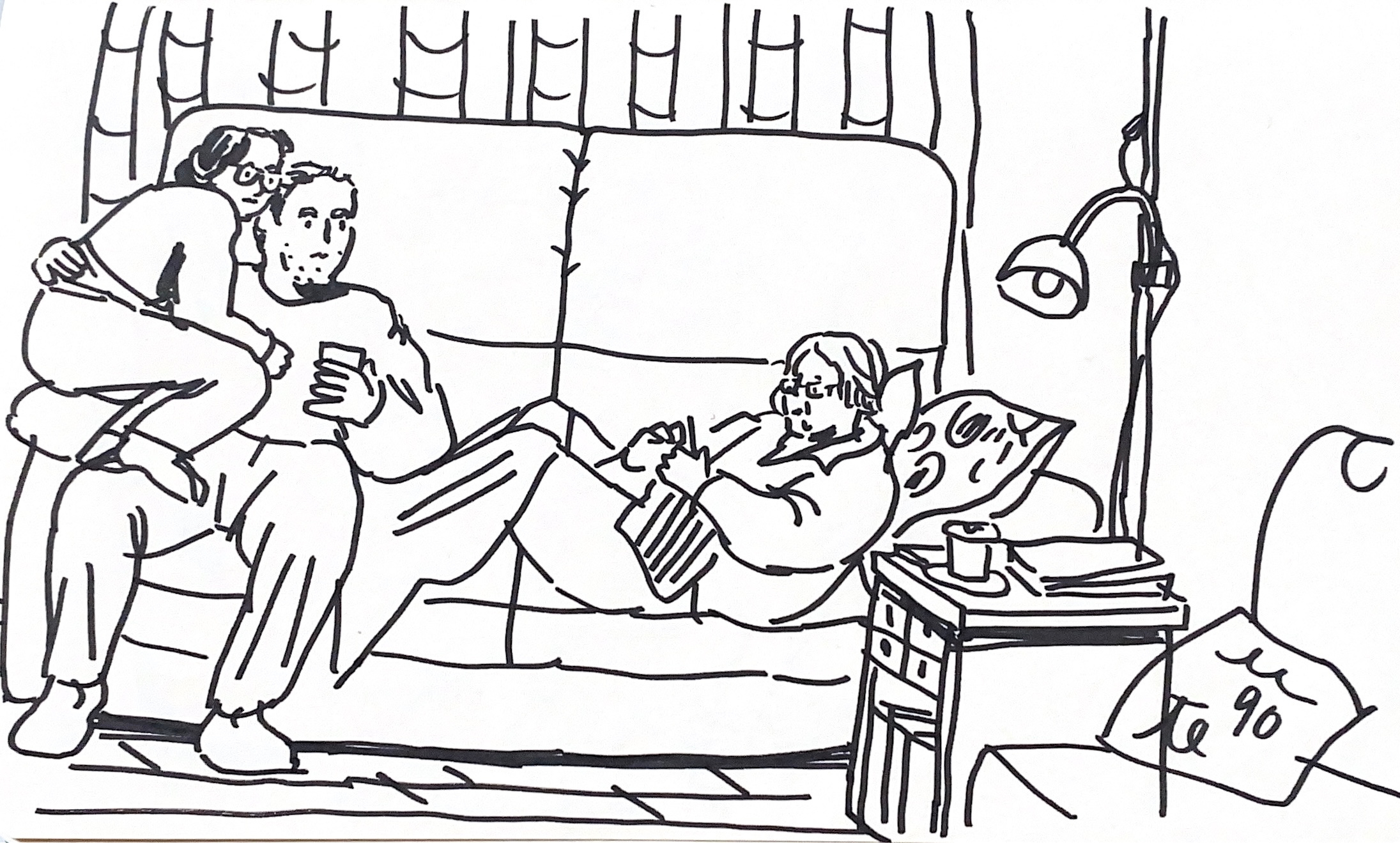
Once upon a time there was a reunion of my Spanish-Venezuelan family, on January first, 2026, in Tenerife. The members of the family live scattered all over the world. None of them lives in Venezuela. They traveled from Santo Domingo, Zurich, Bali, Valencia, Barcelona, Connecticut. The cousin who can only attend by video call remains in Costa Rica.
The main driving force behind the gathering is the grandmother, ninety-eight years old, originally from La Palma, Canary Islands, who in her youth migrated to Venezuela and, fifty years later, returned to her country. Some members of the family have had the chance to see one another in recent years; others have not met for a long time. Among the latter is Aunt A., who, despite not being a blood aunt, is loved by everyone as if she were.
Aunt A. talks a lot. The grandmother’s apartment, already overcrowded days before her arrival, is now overflowing with all the stories A. was unable to share with the family during years of absence. There is much to tell, anecdotes to remember, reasons to cry.
Among her first words, sobbing, she says:
“My God, we can’t let so much time go by—we’re missing our lives, so long apart!”
I take note of this phrase and think about how my life has been so different from that of my parents and my aunts and uncles, who, at my age, had remained in the same city for most of their life. While they belonged to a city, a country, and a relatively homogeneous culture, I belong to all the places where I have lived, to the comings and goings, the goodbyes and the reunions.
Aunt A. talks so much that everyone begins to worry. Mom assures us that she wasn’t like this before. I can’t remember, because it was many years ago that spending time with A. stopped being part of my routine. A. herself claims that when she was young she used to be shy, something none of us can quite believe. Words pour out of her without a filter. She overwhelms us with amusing (and exhausting) judgments about the adults, we, her nieces and nephews have become.
After a couple of days of incessant rambling, Mom declares that something must be wrong with her, and after several hypotheses and a quick search on ChatGPT about side effects, we unanimously agree that, indeed, the rambling is not normal and must be due to a medication A. is taking.
On January third, I am woken by my aunt’s screams:
“They took Maduro! The gringos took him! I can’t believe it! My God, look at this madness! They attacked Caracas!”
I don’t understand what is happening. From the room I share with my sister I can barely make out her words, but I sense that it is something serious. The first thing I do is check my phone—where I learn almost everything that happens in Venezuela—and I see images that, although I had come to imagine them, I deeply doubted I would ever actually see.
I ran out of the room and ran into half my family standing in front of the television, watching the same images I was holding in my hands. Planes bombing Caracas. I couldn’t help but cry out of panic and fear. I thought of my childhood friend who still lives there. I thought of my aunt and my cousin and his family, and I felt relief when I remembered they were traveling just then.
Soon the panic turned into a torrent of questions spilling from everyone gathered there: Could it be true? Did they kill many innocent people? Did this mean the end of the regime? Would they keep bombing? Did they take him? Did they really take him? Do we celebrate? Do we open a bottle of champagne? Do we go out into the street and start shouting?
Could we return to Venezuela? Return—not just for vacations?
My aunt’s rambling soon became contagious and evolved into my digital rambling. I began sharing instagram stories as if my country’s freedom depended on it. I began explaining, over and over again, what seemed obvious to us and what the world seemed incapable of understanding: that despite the uncertainty, despite the danger all of this implied, despite the endless contradictions, despite hating the supposed liberator, despite the terror, despite not agreeing with an intervention… the fact that it had happened filled us with a hazy sense of hope, a hope nonetheless. A sense of hope inconceivable just a day earlier.
These days, that same hope wavers between great disappointment, deep fear, and a blind faith that time will prove us right, that a slow transition (if there truly is one) is better, that history will finally give our country a breath of air.
Grandma, from the sofa she has barely moved from since returning to Spain some twenty years ago, watches cautiously. When the next day we see images of the tyrant captured, I ask her:
“Grandma, did you imagine you would see this in your lifetime?”
“No,” she replies. “What I think is that you are all celebrating too much—too soon.”
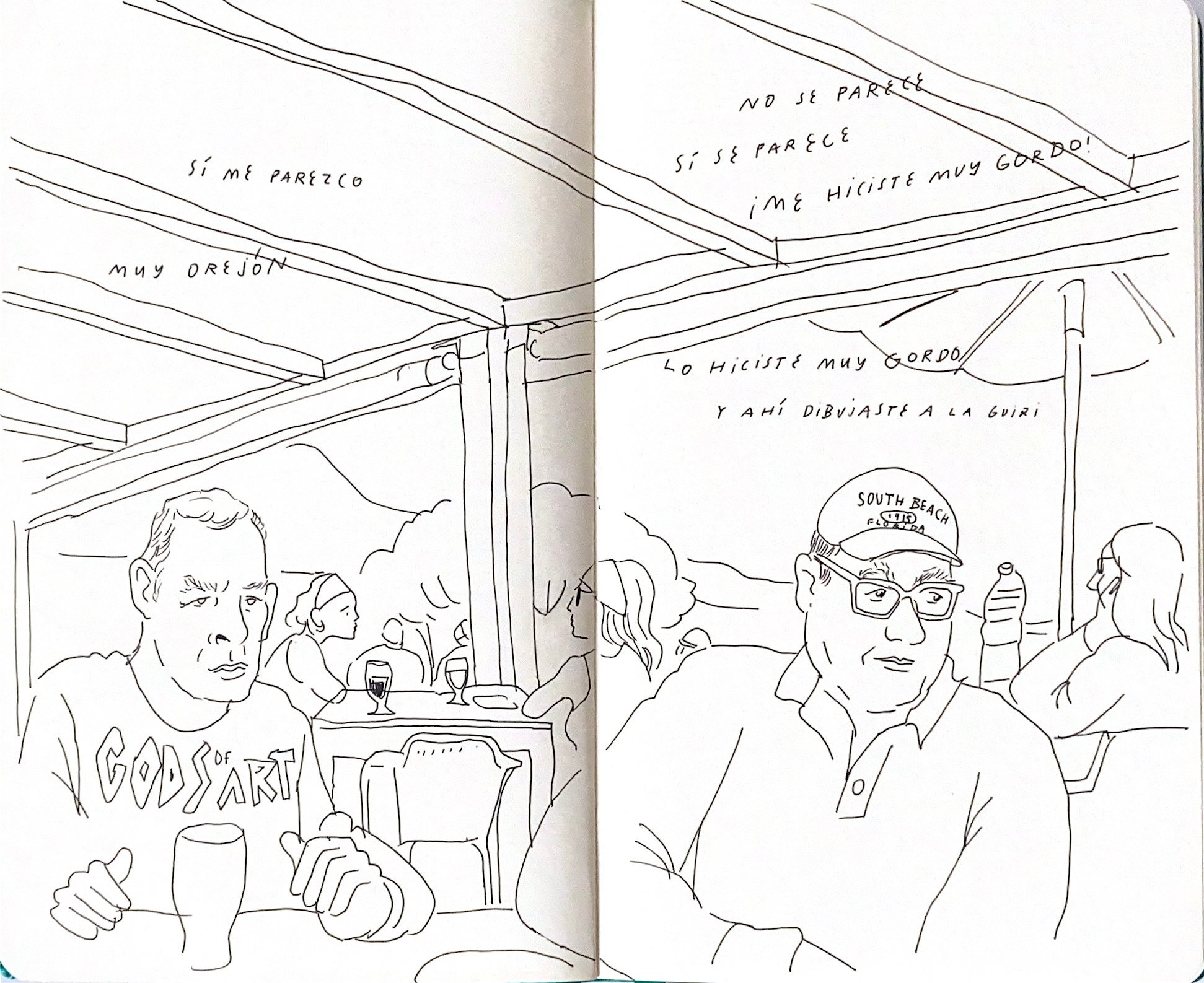
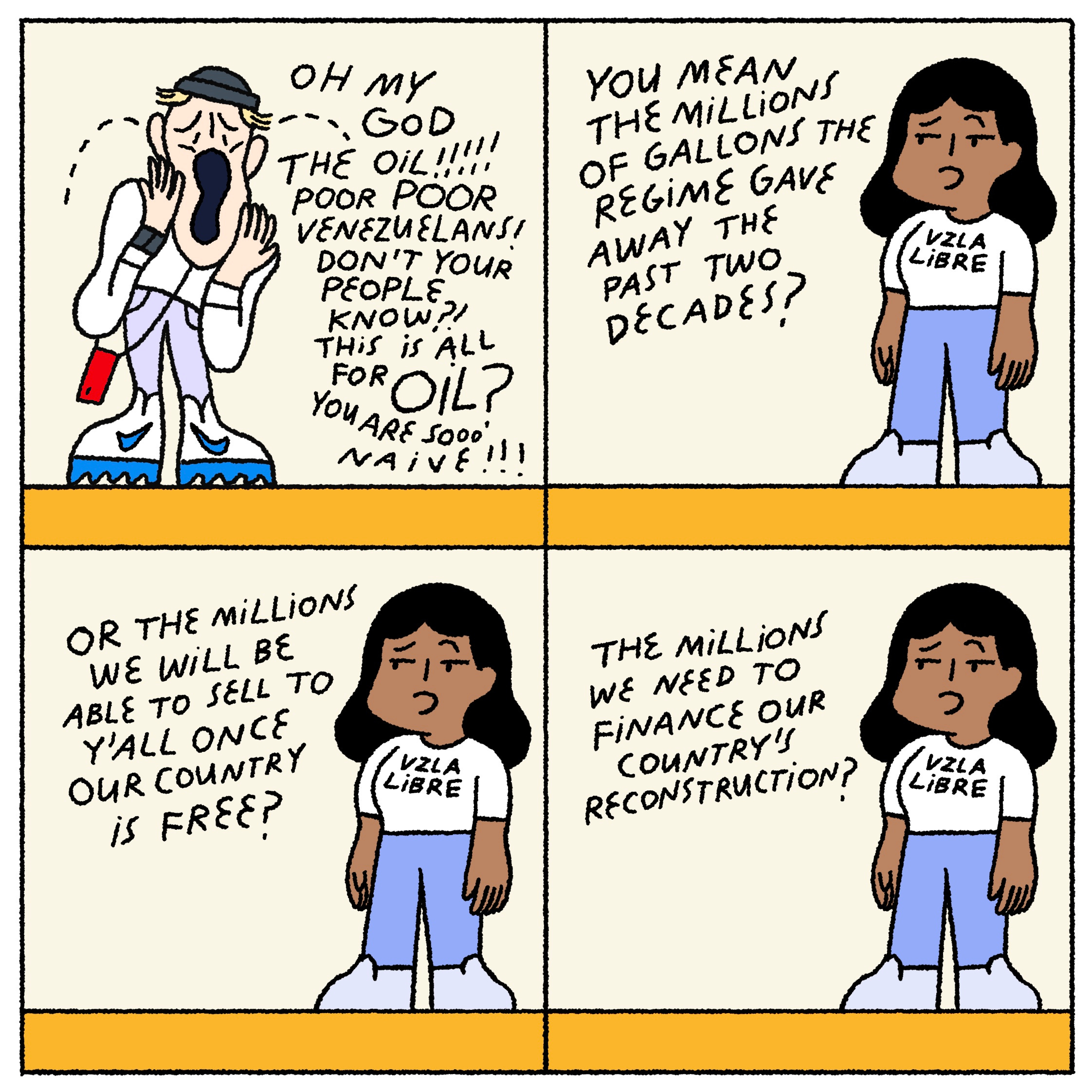
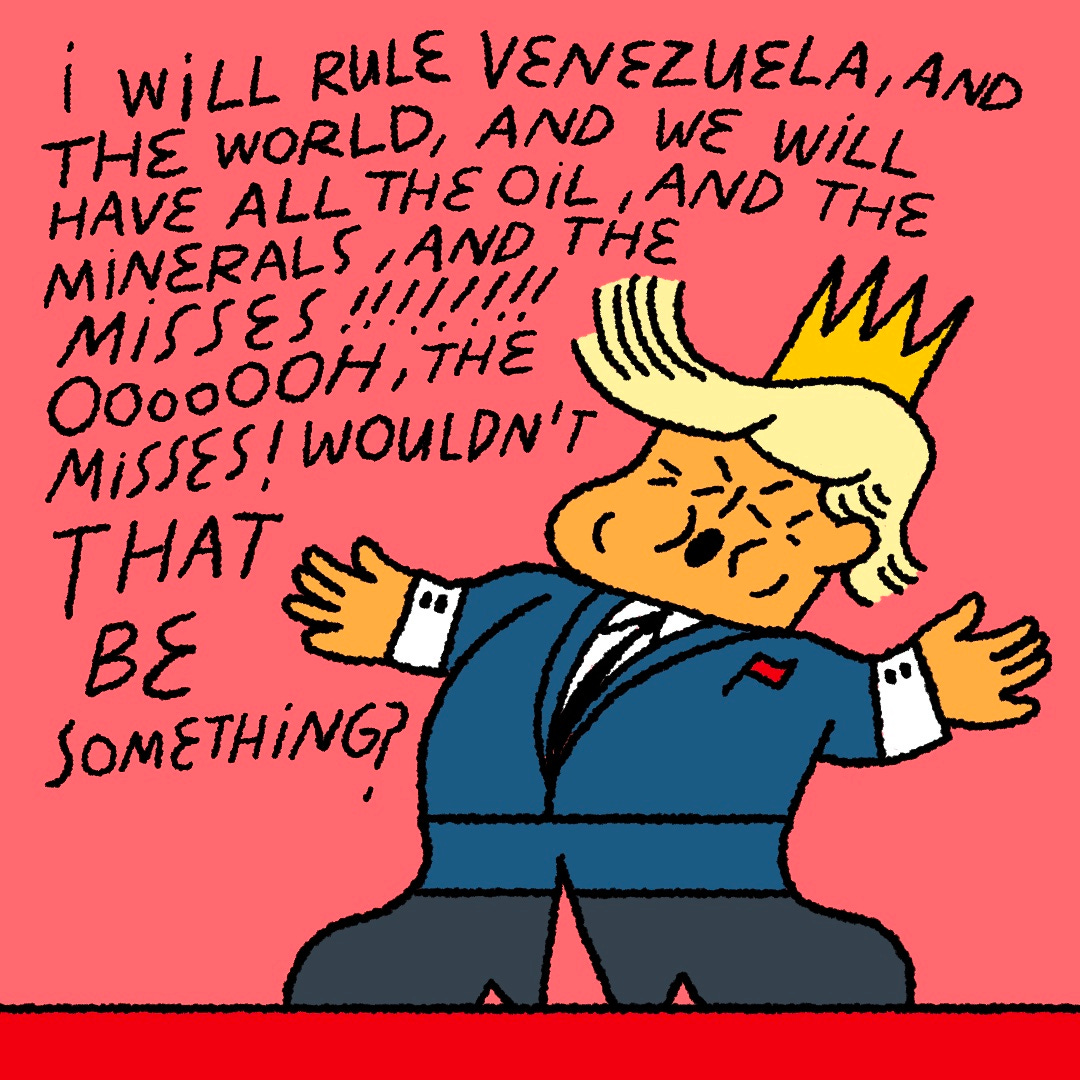
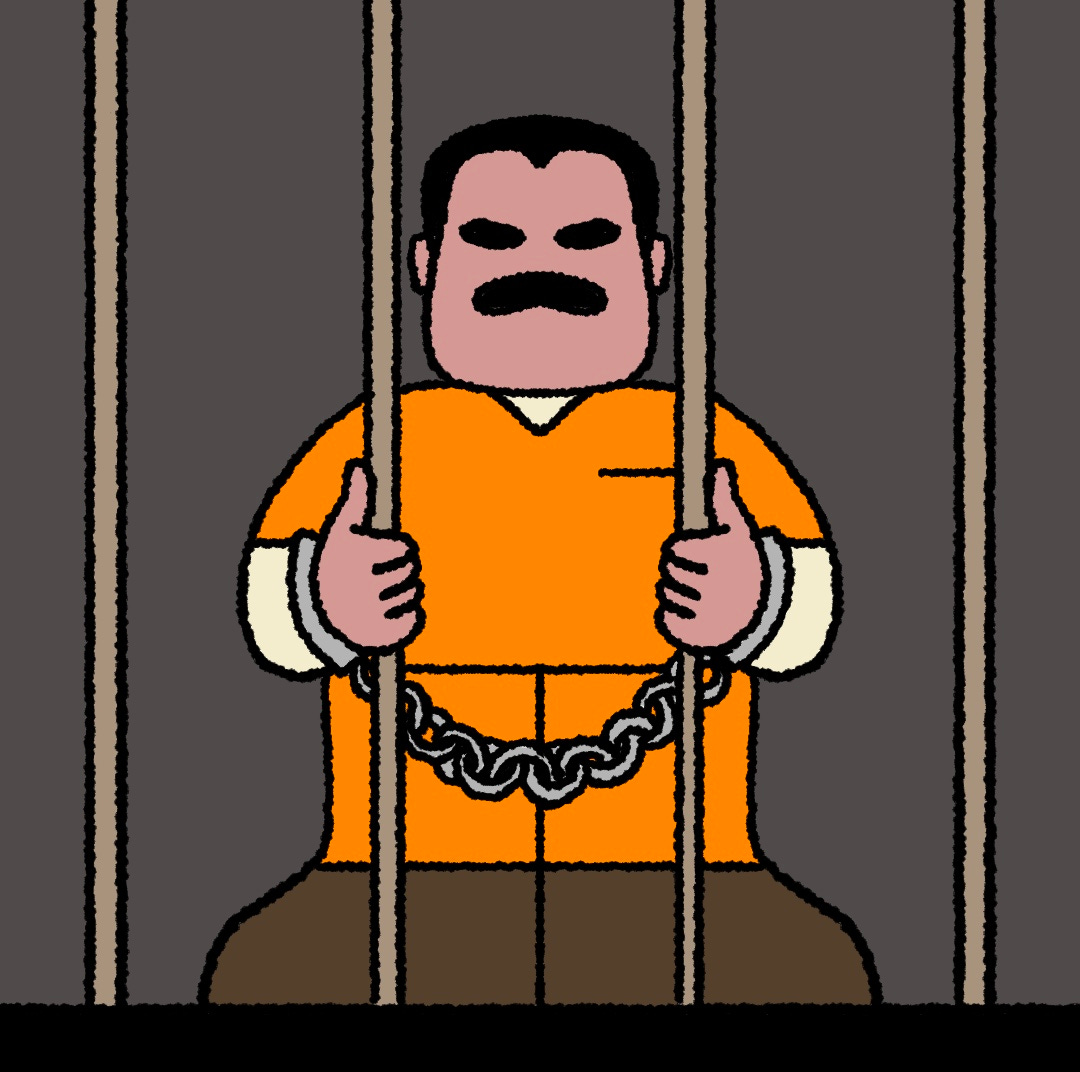
Aparte de escribir esta crónica, me dio por hacer algunas caricaturas políticas. Other than writing this chronicle, I made some political cartoons.
Otras Cositas / Other Tidbits
Quisiera tomar esta oportunidad para mencionar algunos libros y recursos que me han ayudado a mí a comprender mejor la situación de mi país natal y que ilustran el por qué nos vemos hoy en esta coyuntura tan surreal (y muy lejos de ser la ideal).
These are some resources that have helped me understand Venezuela. Unfortunately most of them are in Spanish…
Para historia general: los libros y el podcast Venezolanos de Rafael Arráiz Lucca.
País fuera de servicio, de la antropóloga Paula Vásquez Lezama. He leído ya varios libros sobre la historia reciente de Venezuela y este es el que más me impactó, por su urgencia.
La biografía de Chávez: Hugo Chávez sin uniforme, de Alberto Barrera Tyszka y Cristina Marcano.
Todo lo publicado en Trópico Absoluto.
Las novelas, cuentos, y columnas de Rodrigo Blanco Calderón. También me gustaron las novelas de Karina Sainz Borgo, La edad infinita de Miriam Reyes, Atrás queda la tierra de Arianna de Sousa-García, y aún no he leído Volver a cuándo de María Elena Morán, pero me la han recomendado.
Nido, la novela gráfica de Laura Guarisco.
El canal y podcast de Hacha y Machete: (O)posición Incómoda. Pronto estaré colaborando con ellos.
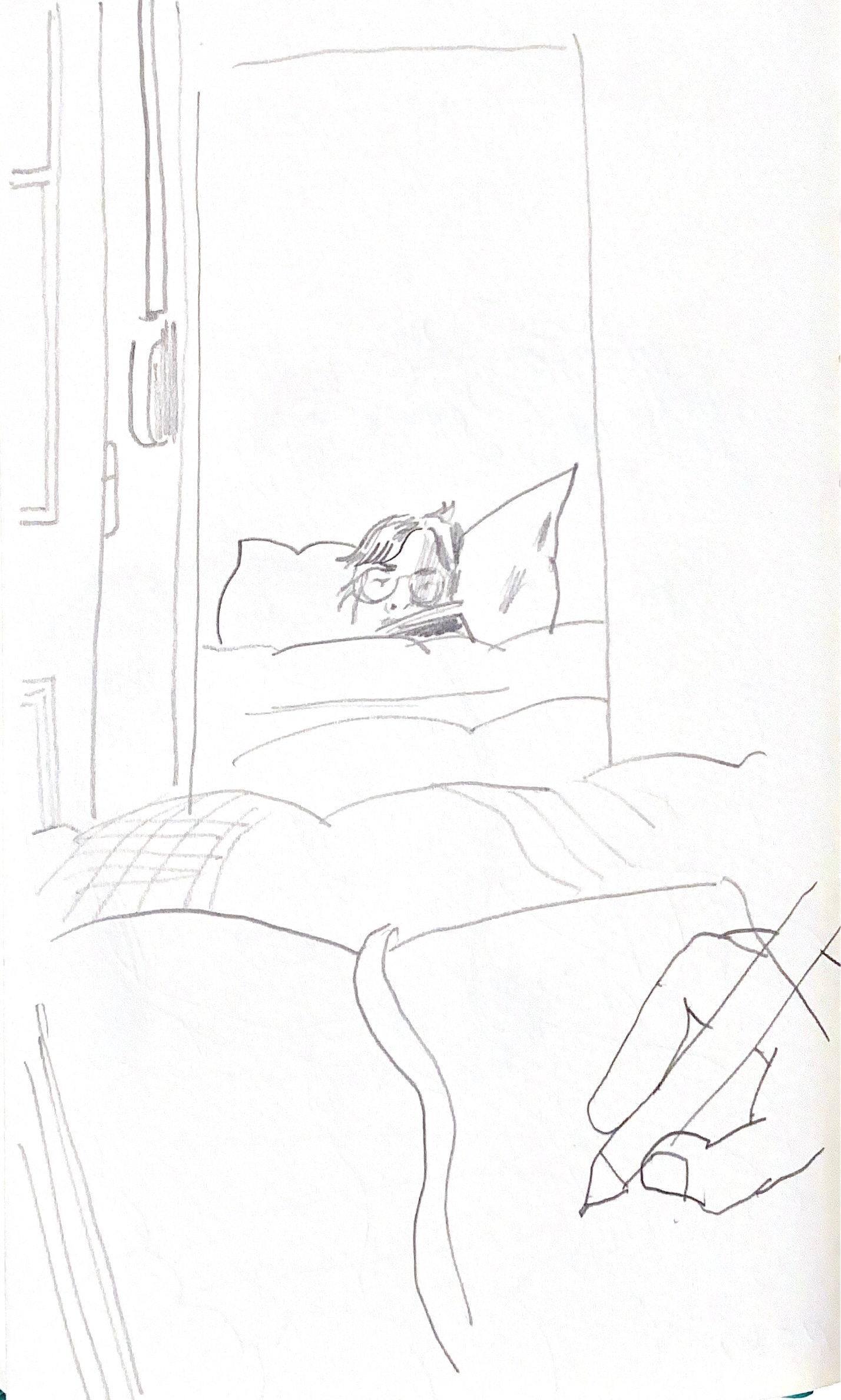
Si llegaste hasta aquí, gracias por leerme e interesarte por el tema que más me obsesiona últimamente, Venezuela, que poco tiene que ver con dibujar. Pronto volveré a compartir dibujos de cosas bonitas.
Saludos, les deseo mucho arte.
If you’ve made it this far, thank you for reading and taking an interest in the topic that has been obsessing me lately, Venezuela, and which has little to do with drawing. Soon I’ll be back to sharing drawings of beautiful things.
Greetings, and I wish you lots of art.
phenomenal piece to start the year. My mom is your grandma, bringing everyone together. The void they'll leave when they're gone will be vast.